ave maria piano sheet music pdf
Ave Maria Piano Sheet Music PDF: A Comprehensive Guide
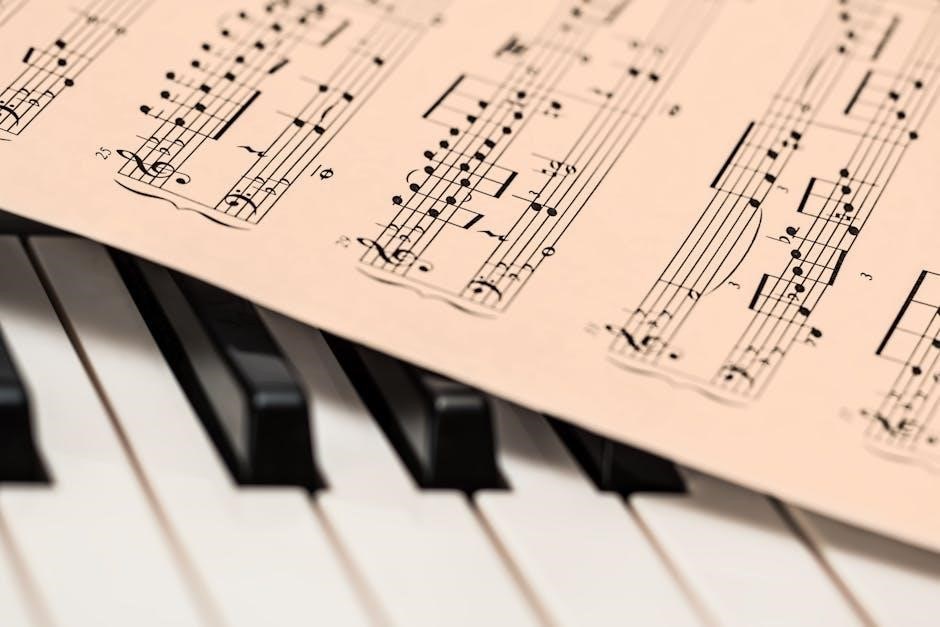
Ave Maria sheet music, particularly in PDF format, is immensely popular among pianists of all levels. This guide explores resources like Musicnotes.com, Sheet Music Direct, and Hugo’s Piano School, offering various arrangements – easy, intermediate, and advanced – by composers like Schubert and Gounod.
Understanding the Popularity of Ave Maria Sheet Music
The enduring appeal of Ave Maria sheet music stems from its profound beauty and spiritual resonance. Both Schubert’s and Gounod’s versions are frequently requested, making readily available PDF versions highly sought after by pianists globally. The piece’s melodic simplicity belies a depth of emotion that captivates performers and audiences alike.
Accessibility plays a significant role in its popularity. The proliferation of online resources offering free and paid sheet music PDFs, such as those found on Sheet Music Direct and free-scores.com, allows musicians to easily acquire the music. The availability of arrangements catering to diverse skill levels – from beginner-friendly easy piano versions to challenging advanced interpretations – further broadens its appeal.
Furthermore, Ave Maria is a staple in piano pedagogy. Its relatively straightforward structure makes it an excellent piece for students to develop technique and musicality. The piece’s cultural significance, often performed at weddings and religious ceremonies, also contributes to its continued demand. The ease of sharing digital PDFs enhances its reach, solidifying its position as a beloved classic in the piano repertoire.
Franz Schubert’s Ave Maria: Historical Context
Franz Schubert composed his Ave Maria in 1825, originally setting a poem by Walter Scott titled “Ellens Third Song,” not a traditional Latin prayer. This is crucial context when seeking sheet music PDFs, as some editions may include the original English lyrics alongside or instead of the Latin text. The piece, cataloged as Op. 52, No. 6, quickly gained popularity for its lyrical melody and emotional depth.
Schubert’s Ave Maria wasn’t immediately recognized as the iconic piece it is today. Its fame grew posthumously, becoming a cornerstone of the Romantic piano repertoire. Numerous arrangements and transcriptions have emerged over the years, resulting in a wide variety of sheet music PDFs available online, ranging from simplified beginner versions to complex concert arrangements.

When searching for Schubert’s Ave Maria sheet music, be mindful of the editor. Pawel Jura’s edition is frequently cited; Understanding the historical origin – a setting of a secular poem – provides a richer appreciation for the work and informs interpretation. The availability of digital PDFs has democratized access to this masterpiece, allowing pianists worldwide to explore and perform Schubert’s beautiful composition.

Charles Gounod’s Ave Maria: A Distinct Version
While often conflated with Schubert’s, Charles Gounod’s Ave Maria is a separate and equally beloved composition. Gounod, in 1859, actually set the traditional Latin text of the Ave Maria to a melody borrowed from Johann Sebastian Bach’s Prelude No. 1 in C major from the Well-Tempered Clavier. This is a key distinction when searching for sheet music PDFs – ensure you’re obtaining the Gounod version if that’s your preference.
Gounod’s arrangement, for voice and piano, is known for its soaring vocal line and harmonic richness. Numerous piano arrangements exist, from solo piano transcriptions to simplified accompaniments. Free-scores.com and Sheet Music Direct often feature both Schubert and Gounod’s versions, so careful attention to the composer’s name is vital when downloading PDFs.
The Gounod Ave Maria is frequently performed by mezzo-sopranos, with sheet music often specifically arranged for that vocal range. When seeking PDFs, look for editions specifying the intended voice type. The combination of Bach’s harmonic foundation and the Latin prayer creates a profoundly moving and spiritually resonant piece, making it a popular choice for both performers and listeners alike.
Availability of Free PDF Sheet Music
The internet offers a wealth of Ave Maria sheet music in PDF format, ranging from simple beginner arrangements to complex, virtuosic versions. Websites like Free-scores.com are dedicated to providing free sheet music, including numerous arrangements of both Schubert’s and Gounod’s Ave Maria. However, quality and accuracy can vary significantly with free resources.
Many piano teachers and enthusiasts also share their arrangements online, often available through personal websites or platforms like MuseScore. YouTube tutorials frequently link to downloadable PDF sheet music in the video description. Be cautious when downloading from unfamiliar sources; always scan files for viruses and verify the accuracy of the transcription.

While free PDFs are readily available, consider the benefits of purchasing sheet music from reputable vendors like Musicnotes.com or Sheet Music Direct. These sites generally offer higher-quality, professionally-engraved sheet music with accurate fingerings and dynamics. Remember to always respect copyright laws when utilizing free resources.
Legality and Copyright Considerations for Free PDFs
Downloading Ave Maria sheet music PDFs for free raises important legal and ethical considerations. While many arrangements of classical pieces like Schubert’s and Gounod’s Ave Maria are in the public domain – meaning copyright has expired on the original compositions – specific arrangements and editions are often protected by copyright.
Distributing copyrighted sheet music without permission is illegal. Many free PDF sources operate in a gray area, potentially infringing on copyright. Purchasing sheet music from legitimate vendors ensures composers and arrangers are compensated for their work. Be wary of websites offering seemingly too-good-to-be-true deals or lacking clear copyright information.
Using free PDFs for personal study is generally considered acceptable, but performing or distributing copies of copyrighted arrangements publicly requires permission or licensing. Always check the terms of use on websites offering free sheet music and respect the intellectual property rights of creators. Supporting legal sources helps ensure the continued creation of high-quality musical resources.
Sheet Music Difficulty Levels: Beginner, Intermediate, Advanced
Ave Maria piano sheet music PDFs cater to a wide range of skill levels, typically categorized as beginner, intermediate, and advanced. Beginner arrangements simplify the melody and harmony, often using single-note accompaniment and limited chord voicings. These versions prioritize accessibility, allowing novice pianists to learn the piece without overwhelming technical challenges.
Intermediate arrangements introduce more complex harmonies, richer chord progressions, and slightly more intricate rhythms. They may include basic ornamentation and require a greater understanding of musical phrasing. These PDFs are suitable for pianists with some experience who are looking to expand their skills.
Advanced arrangements present the full complexity of the piece, demanding a high level of technical proficiency. Expect elaborate ornamentation, challenging arpeggios, and sophisticated harmonic structures. These versions often require significant practice and a strong foundation in piano technique. Resources like Sheet Music Direct and Hugo’s Piano School offer options across all levels.
Easy Piano Arrangements for Beginners
Ave Maria easy piano sheet music PDFs are designed for those new to the instrument or with limited piano experience. These arrangements prioritize simplicity, focusing on the core melody and basic chord accompaniment. Expect simplified rhythms and minimal ornamentation, making the piece accessible and encouraging early success.
Many beginner PDFs utilize single-note melodies in the right hand, paired with simple block chords in the left. Key signatures are often chosen for ease of reading, avoiding excessive sharps or flats. Resources like Musicnotes.com and free-scores.com frequently offer beginner-friendly versions;
These arrangements are excellent for developing fundamental skills such as note reading, rhythm, and hand coordination. They provide a gentle introduction to the beauty of Schubert’s or Gounod’s Ave Maria, building confidence and fostering a love for piano playing. Look for PDFs specifically labeled “Easy Piano” or “Beginner” to ensure suitability.
Intermediate Piano Arrangements: Expanding Skills
Ave Maria intermediate piano sheet music PDFs build upon foundational skills, introducing more complex harmonies, rhythms, and textures. These arrangements are suitable for pianists who can comfortably read music and possess a basic understanding of chords and scales.
Expect to encounter more elaborate left-hand accompaniments, potentially including arpeggios or broken chords, adding depth and richness to the sound. Intermediate PDFs often incorporate more nuanced dynamics and phrasing, encouraging expressive playing. Sheet Music Direct and Hugo’s Piano School are excellent sources for these arrangements.
These versions typically retain the core melody but may include subtle embellishments or variations. They challenge players to refine their technique, improve their musicality, and develop a deeper understanding of the piece’s harmonic structure. Intermediate arrangements serve as a stepping stone towards mastering more advanced versions of Ave Maria.

Advanced Piano Arrangements: Mastering the Piece
Ave Maria advanced piano sheet music PDFs represent the pinnacle of pianistic challenge, demanding a high level of technical proficiency and musical maturity. These arrangements often feature intricate ornamentation, complex chord voicings, and demanding rhythmic patterns. They are designed for experienced pianists seeking to fully explore the expressive potential of Schubert’s or Gounod’s masterpiece.
Expect to encounter challenging passages requiring precise fingerwork, advanced pedaling techniques, and a deep understanding of musical phrasing. Advanced PDFs may include elaborate introductions, interludes, and codas, expanding upon the original composition. Resources like Sheet Music Direct often offer these complex versions;
Mastering an advanced arrangement requires dedicated practice, careful attention to detail, and a commitment to musical interpretation. These PDFs are not merely about playing the correct notes; they are about conveying the emotional depth and spiritual beauty of Ave Maria with artistry and finesse.

Key Signatures and Transposition Options
Ave Maria sheet music PDFs commonly appear in various key signatures, though F major and G major are frequently encountered, particularly for vocal arrangements. Understanding the original key is crucial, but many online resources, such as Musicnotes.com and Sheet Music Direct, offer transposition options. This allows pianists to adapt the piece to suit their vocal range or instrumental preferences.
Transposition involves shifting the entire piece up or down in pitch while maintaining the same musical intervals. PDF editing software or dedicated sheet music platforms facilitate this process. When transposing, consider the impact on the difficulty level; some keys may present more challenging fingerings.
For vocalists, selecting a comfortable key is paramount. PDFs often specify the intended vocal range (mezzo-soprano, soprano, etc.). Utilizing transposition tools ensures the piece aligns with the singer’s capabilities. Always review the transposed sheet music carefully to confirm accuracy and readability before performance.
Finding Sheet Music for Different Vocal Ranges
Ave Maria sheet music PDFs cater to diverse vocal ranges, from soprano to bass, necessitating careful selection. Resources like Sheet Music Direct and free-scores.com often categorize arrangements by voice type. Identifying the intended range – soprano, mezzo-soprano, alto, tenor, or bass – is crucial for a comfortable and effective performance.
Many PDFs specify the vocal range directly on the sheet music or in the product description. When a suitable range isn’t explicitly stated, examining the highest and lowest notes provides a clear indication. Transposition, a feature offered by platforms like Musicnotes.com, allows adaptation to individual vocal capabilities.
Consider the tessitura, the most comfortable and frequently used part of a singer’s range, not just the extreme high and low notes. PDFs designed for specific vocal ranges often feature optimized piano accompaniments to complement the voice. Prioritizing a well-matched arrangement enhances the overall musicality and avoids strain.
Resources for Downloading Sheet Music: Musicnotes.com
Musicnotes.com stands as a prominent online platform for acquiring Ave Maria sheet music in PDF format. They offer a vast catalog encompassing arrangements by both Franz Schubert and Charles Gounod, catering to varying skill levels – beginner, intermediate, and advanced. Users benefit from high-quality digital sheet music, instantly downloadable after purchase.
Musicnotes.com provides multiple arrangement options, including solo piano versions and vocal scores with piano accompaniment. A key feature is the ability to transpose the sheet music to different keys, accommodating individual vocal ranges or instrumental preferences. Playback functionality, utilizing their mobile app, allows users to hear the piece before learning it.
The platform supports various file formats, including PDF, MIDI, and MP3, offering flexibility in how you practice and learn. Detailed previews are available, enabling assessment of arrangement suitability. Musicnotes.com also frequently offers promotional discounts and bundles, providing cost-effective access to a wide selection of Ave Maria arrangements.
Resources for Downloading Sheet Music: Sheet Music Direct
Sheet Music Direct is another leading online destination for sourcing Ave Maria sheet music in PDF format. They boast an extensive library featuring arrangements of both Schubert’s and Gounod’s versions, designed for pianists of all proficiencies – from beginners to seasoned performers. The platform emphasizes top-quality digital sheet music, available for immediate download.
Sheet Music Direct distinguishes itself with interactive sheet music features, allowing users to adjust tempo, loop sections, and even practice hands separately. They offer arrangements for solo piano, vocal solo with piano, and ensemble settings. Transposition tools are readily available, enabling adaptation to preferred keys and vocal ranges.
Beyond PDF downloads, Sheet Music Direct provides access to MIDI and MP3 files for playback and learning purposes. Their catalog includes arrangements specifically tailored for easy piano, facilitating accessibility for novice players. Regular sales and promotions enhance affordability, making a diverse range of Ave Maria arrangements readily obtainable.
Resources for Downloading Sheet Music: Hugo’s Piano School
Hugo’s Piano School presents itself as a valuable resource for acquiring Ave Maria sheet music, specializing in digital downloads. They offer arrangements crafted with pedagogical intent, catering to students and self-learners alike. Their catalog features both Schubert’s and Gounod’s interpretations, with a focus on clarity and playability.
Hugo’s Piano School distinguishes itself by providing accompanying online piano courses and tutorials, designed to complement the sheet music. These resources aid in understanding the nuances of the piece and developing proper technique. They offer a “various bundle” including Ave Maria, suggesting curated collections for comprehensive learning.
The platform provides sheet music in PDF format, accessible after purchase. Hugo’s also emphasizes a user-friendly search function, allowing quick location of desired arrangements; Beyond Ave Maria, they offer a broad selection of classical piano repertoire. Their commitment to educational resources makes them a strong choice for aspiring pianists seeking to master this iconic piece.
Resources for Downloading Sheet Music: Free-scores.com
Free-scores.com operates as a vast online library offering a substantial collection of Ave Maria sheet music in PDF format. The site distinguishes itself by providing a significant amount of free content alongside premium options, making it accessible to a wide range of musicians. Users can find arrangements for both Franz Schubert’s and Charles Gounod’s versions of the beloved hymn.
The platform’s interface allows for filtering by composer, instrumentation (piano solo, voice and piano), and skill level. While the quality of free scores can vary, Free-scores.com hosts contributions from numerous arrangers, offering diverse interpretations. Users should carefully review scores before committing to performance.
Beyond PDF downloads, the site sometimes includes MIDI files, enabling playback and practice alongside the sheet music. However, the primary draw remains the extensive PDF library. It’s important to note that while many scores are free, some require a subscription or purchase for access. Free-scores.com is a valuable starting point for exploring Ave Maria arrangements.
Understanding Opus Numbers (Op. 52, No. 6)
When navigating Ave Maria sheet music, particularly for Franz Schubert’s composition, encountering “Op; 52, No. 6” is common. “Opus” (Op.) signifies a work’s publication order, essentially a catalog number assigned by the composer or publisher. Schubert’s Ave Maria isn’t originally a standalone piece; it’s the sixth song within his Sechs Gesänge (Six Songs), Op. 52.
This numbering system helps distinguish between different works by the same composer. The “No. 6” specifically identifies the Ave Maria within that collection. Understanding this is crucial when searching for sheet music, as some editions may simply list “Op. 52, No. 6” rather than the title itself.
Many PDF sheet music resources, like Musicnotes.com and Sheet Music Direct, utilize these opus numbers for accurate categorization. Recognizing this convention ensures you locate the correct arrangement. Furthermore, different arrangements – easy piano, intermediate, advanced – may still reference the Op. 52, No. 6 designation, clarifying the source material. It’s a fundamental aspect of identifying Schubert’s Ave Maria.
PDF vs. MIDI vs. MP3 Formats: Which to Choose?
When seeking Ave Maria sheet music, you’ll encounter various digital formats: PDF, MIDI, and MP3. Each serves a distinct purpose. A PDF (Portable Document Format) provides a digital image of the sheet music, ideal for printing and visual learning. It preserves the original notation accurately, making it the preferred choice for serious study and performance, readily available from sites like free-scores.com.
MIDI (Musical Instrument Digital Interface) files contain instructions for playing the music, not the visual notation. They’re useful for hearing the piece played back by a computer, but lack the visual guidance of sheet music. MP3 files are audio recordings – essentially a finished performance – and are helpful for listening and familiarization, but don’t allow for interactive practice.
For learning piano, a PDF is essential. MIDI can supplement learning by providing an aural reference, and MP3s offer a performance example. However, if your goal is to play the Ave Maria, prioritize a high-quality PDF sheet music download for effective practice and musical interpretation.
Utilizing Online Tutorials and Play-Along Tracks
Supplementing your Ave Maria piano sheet music PDF with online resources significantly enhances the learning process. Numerous tutorials on platforms like YouTube offer step-by-step guidance, breaking down complex passages into manageable sections. These visual aids demonstrate proper fingering, dynamics, and phrasing, crucial for interpreting Schubert’s or Gounod’s masterpiece.
Play-along tracks, often available alongside sheet music on sites like Musicnotes.com and Sheet Music Direct, allow you to practice with a virtual accompaniment. This fosters rhythmic accuracy and helps develop your ability to play in time with others. Hugo’s Piano School also provides resources of this kind.
Look for tutorials specifically tailored to the arrangement you’ve chosen – easy, intermediate, or advanced. Many instructors offer detailed analyses of the harmonic structure and melodic contours. Combining a quality PDF with these interactive tools accelerates your progress and deepens your understanding of this beloved piece.
Software for Viewing and Editing PDF Sheet Music

When working with Ave Maria piano sheet music in PDF format, dedicated software can greatly improve your experience. While standard PDF readers like Adobe Acrobat Reader are sufficient for viewing, specialized programs offer enhanced features for musicians.
ForScore and MuseScore are popular choices, allowing you to annotate PDFs directly – adding fingerings, dynamics, and practice notes. These apps also facilitate page turning and organization of your sheet music library. Some software even supports audio playback, enabling you to hear the piece as you follow along with the score.

If you require more extensive editing capabilities, consider software like Finale or Sibelius. These professional-grade programs allow you to transpose the music, adjust the layout, and even create custom arrangements from your PDF. However, they come with a steeper learning curve and price tag. Choosing the right software depends on your needs and technical proficiency.
Leave a Reply