bosch dishwasher 500 series manual
Bosch’s 500 Series offers reliable performance and innovative features, blending efficiency with quiet operation. It’s a popular choice for modern kitchens,
balancing cost and capability.
Overview of the 500 Series
The Bosch 500 Series represents a sweet spot in their dishwasher lineup, delivering a robust set of features without the premium price tag of higher tiers. Known for its quiet operation – typically around 44 dBA – it integrates seamlessly into open-concept living spaces.
This series commonly includes features like RackMatic® adjustable racks, offering flexibility for various dish sizes, and multiple wash cycles to tackle different levels of soiling. It’s designed for everyday use, providing dependable cleaning performance and durability.
Key Features and Benefits
Bosch 500 Series dishwashers boast several advantages; RackMatic® offers adjustable racks for versatile loading, while PrecisionWash™ ensures thorough cleaning. The EcoWash® cycle conserves water and energy.
Benefits include quiet operation (around 44 dBA), durable stainless steel interiors, and a variety of wash cycles for different needs. These dishwashers are designed for reliability and efficient performance, simplifying your kitchen routine.
Understanding Your Dishwasher’s Control Panel
The Bosch 500 Series control panel features intuitive buttons and a clear display. It allows easy selection of cycles, options, and monitoring of operation status.
Control Buttons and Their Functions
The Power button initiates or stops the dishwasher. Cycle selection buttons (Normal, Auto, Heavy, Delicate) determine wash intensity; Option buttons like “Sanitize” or “Delay Start” customize cycles. The Start button begins the selected wash program. A “Reset” button clears error codes. Understanding each button ensures optimal dishwasher performance and tailored cleaning for various loads, maximizing efficiency and results.
Display Indicators and Error Codes
The 500 Series display uses indicators for cycle progress, remaining time, and selected options. Error codes (like F01 for water inlet issues or F67 for drain problems) signal malfunctions. Refer to the manual for specific code meanings and troubleshooting steps. Ignoring error codes can lead to further damage; addressing them promptly ensures continued, reliable dishwasher operation and prevents costly repairs.

Loading Your Dishwasher Correctly
Proper loading maximizes cleaning efficiency; Arrange dishes to allow water circulation, facing soiled surfaces toward the spray arms. Avoid overcrowding for optimal results.
Proper Rack Arrangement
The upper rack is ideal for glasses, cups, and smaller items. Adjust the rack height if needed for taller objects. The lower rack accommodates plates, bowls, and pots. Ensure items don’t block the spray arms’ rotation. Place larger items along the sides and back. Silverware goes in the basket, alternating directions to prevent nesting. Proper arrangement ensures thorough cleaning and prevents damage.
Items That Are Safe and Unsafe to Wash
Generally safe items include dishes, glassware, and most plastics labeled “dishwasher safe.” Avoid washing wood, cast iron, delicate china with hand-painted details, and aluminum. Hand-wash sharp knives for safety. Check manufacturer’s instructions before washing any item. Certain plastics may warp or melt at high temperatures, so use the delicate cycle.

Detergent and Rinse Aid Usage
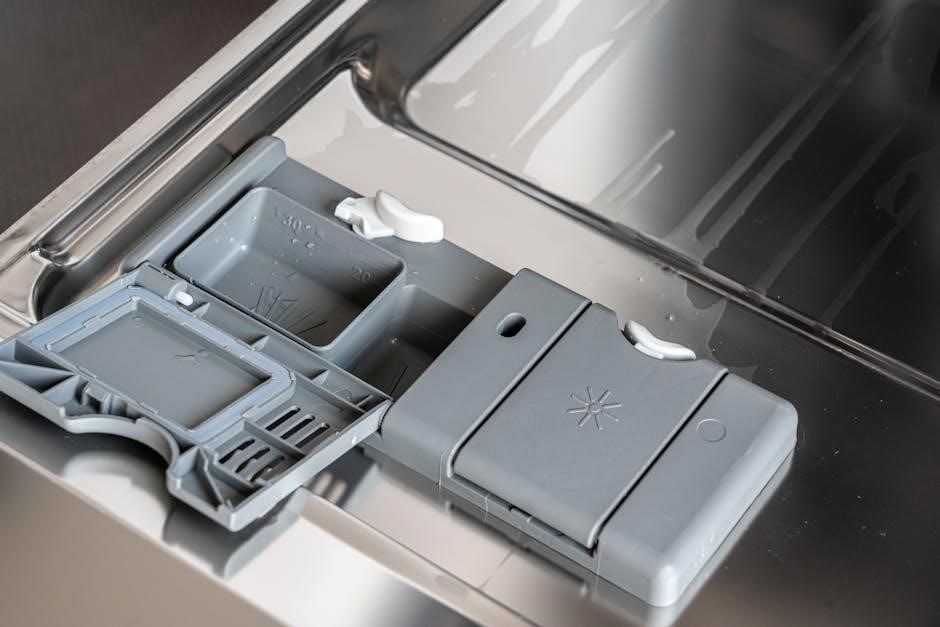
Use quality dishwasher detergent – powder, gel, or pods – following package directions. Rinse aid minimizes water spots and improves drying, ensuring sparkling clean dishes.
Recommended Detergent Types
Bosch dishwashers perform optimally with modern detergents formulated for hard water and food soil. Powder, gel, and pod detergents are all suitable, but pods are convenient. Avoid detergents with bleach if you have septic systems.
Always follow the detergent manufacturer’s instructions for proper dosage, adjusting based on water hardness and load size. Using too much detergent can leave residue, while too little may result in poor cleaning performance.
Rinse Aid: Why and How to Use It
Rinse aid is crucial for spotless dishes and faster drying, especially with hard water. It reduces water surface tension, preventing droplets from forming on dishes. Fill the rinse aid dispenser according to your water hardness level – consult your manual. Bosch dishwashers often have adjustable rinse aid settings; experiment to find the optimal level for your needs, ensuring sparkling clean results every time.

Wash Cycle Selection
The 500 Series provides cycles like Normal, Heavy, Delicate, and Quick Wash. Choosing the right cycle optimizes cleaning performance and protects your dishware effectively.
Normal Cycle – Everyday Cleaning
The Normal cycle is designed for daily dishwashing loads with a moderate amount of food soil. It balances effective cleaning with energy and water conservation. This cycle typically uses a moderate temperature and spray intensity, making it suitable for most commonly used dishes, glasses, and cutlery.
It’s the go-to option for routine cleaning, delivering sparkling results without excessive resource consumption.
Heavy Duty Cycle – For Stubborn Residue
The Heavy Duty cycle tackles heavily soiled dishes, baked-on food, and tough residue. This cycle utilizes higher water temperatures and increased spray pressure for a more thorough clean. It’s ideal for casserole dishes, pots, and pans with stubborn food particles. Expect a longer wash time and increased energy consumption with this powerful cleaning option.
Delicate/Glass Cycle – Gentle Cleaning
The Delicate/Glass cycle is specifically designed for fragile items like stemmed glassware, crystal, and delicate china. It uses lower water temperatures and a gentler spray pattern to prevent chipping or breakage. This cycle ensures a thorough clean without risking damage to your most treasured dishware, offering peace of mind.
Quick Wash Cycle – When You’re in a Hurry
The Quick Wash cycle is ideal for lightly soiled dishes needing a fast turnaround. Typically completing in under an hour, it utilizes increased water pressure and higher temperatures for efficient cleaning. While not suited for heavily soiled loads, it’s perfect for daily use and when you need dishes cleaned quickly, saving both time and energy.
Maintenance and Cleaning
Regular maintenance ensures optimal performance and longevity. Cleaning the filter, spray arms, and interior prevents buildup and maintains efficient dishwashing results.
Cleaning the Filter System
The filter system, typically located at the bottom of the dishwasher’s tub, requires routine cleaning to prevent clogs and ensure proper water circulation. Remove the lower rack to access the filter assembly. Twist and lift to remove the cylindrical and flat filters. Rinse thoroughly under warm water, removing food particles and debris. A soft brush can aid in cleaning. Reassemble carefully, ensuring proper alignment, before replacing the lower rack. Regular filter cleaning—at least monthly—maintains optimal dishwasher performance.
Cleaning the Spray Arms
Spray arms distribute water for effective cleaning; clogged holes reduce performance. Locate the upper and lower spray arms – they often detach easily. Remove them and inspect the spray nozzles for blockages. Use a toothpick or small wire to clear any debris. Rinse the arms thoroughly under running water. Reattach securely, ensuring free rotation. Inspect regularly, ideally monthly, to maintain optimal spray patterns and cleaning results.
Dishwasher Interior Cleaning
Regular interior cleaning prevents odors and maintains hygiene. Run an empty cycle with dishwasher cleaner monthly, or use a vinegar solution (1 cup in the upper rack). Wipe down the door, seals, and sides with a damp cloth. Address any visible stains or buildup. Avoid abrasive cleaners, which can damage the stainless steel interior. A clean interior ensures fresh-smelling dishes and optimal performance.

Troubleshooting Common Issues
Addressing typical problems like starting failures, poor cleaning, or leaks is often straightforward. Consult the manual for error codes and solutions before contacting service.
Dishwasher Not Starting
If your Bosch 500 Series dishwasher fails to start, first verify the power supply – check the circuit breaker and ensure the dishwasher is properly plugged in. Examine the door latch; it must be securely closed for operation.
Consult the manual for specific error codes displayed, as these pinpoint the issue. A reset may resolve minor electrical glitches. If problems persist, professional service is recommended.
Poor Cleaning Performance
Experiencing unsatisfactory cleaning? Ensure proper loading – avoid overcrowding and blockages. Verify spray arm rotation isn’t obstructed. Confirm adequate detergent usage, selecting the appropriate type for your water hardness. A clogged filter significantly reduces cleaning efficacy; regularly clean it. Run a dishwasher cleaner cycle monthly to eliminate residue buildup and maintain optimal performance.
Leaking Issues
Noticed water leakage? First, check the door gasket for damage or debris. Ensure the dishwasher is level to prevent water spillage. Inspect the drain hose and connections for cracks or looseness. A clogged drain can also cause leaks. If issues persist, examine the water inlet valve and spray arm connections for potential sources of the leak.

Safety Precautions
Always disconnect power before maintenance. Use only dishwasher detergents, and keep them away from children. Avoid touching heating elements post-wash; they’re hot!
Electrical Safety
Ensure proper grounding is established during installation to prevent shocks. Never attempt to repair the dishwasher yourself; contact qualified technicians for electrical issues. Do not use extension cords or adapters. Always disconnect the power supply at the breaker before performing any maintenance or cleaning. A damaged power cord must be replaced immediately by a certified professional to avoid hazards.
Proper Use of Dishwasher Detergents
Utilize only dishwasher detergents specifically designed for automatic dishwashers. Avoid hand soap, as it creates excessive suds. Measure detergent carefully, following package instructions and water hardness levels. Overuse can leave residue; underuse results in poor cleaning. Powder, gel, or pods are acceptable, but ensure complete dissolution during the wash cycle for optimal performance.
Warranty Information
Bosch dishwashers include a limited warranty covering parts and labor for one year. Extended warranties are available for purchase, offering additional coverage and peace of mind.
Coverage Details
The standard Bosch 500 Series dishwasher warranty typically covers defects in materials and workmanship for one year from the date of purchase. This includes parts and labor for repairs performed by authorized Bosch service technicians. Cosmetic issues and damage resulting from misuse, improper installation, or acts of nature are generally excluded. Extended warranty options can significantly broaden this coverage, potentially including additional years of parts and labor, or coverage for specific components like the motor or control panel.
How to Make a Claim
To initiate a warranty claim for your Bosch 500 Series dishwasher, first gather your proof of purchase and model number. Contact Bosch’s customer service via phone or their official website to report the issue. A technician may be dispatched to diagnose the problem. Keep detailed records of all communication and repair attempts. Claims must be submitted within the warranty period to be considered valid.

Energy Efficiency Tips
Optimize cycles and reduce water usage by utilizing the Eco cycle and fully loading the dishwasher. Avoid pre-rinsing dishes to conserve both energy and water.
Optimizing Wash Cycles
To maximize efficiency, select the appropriate cycle for your load. The Bosch 500 Series offers Eco cycles for lightly soiled dishes, saving water and energy. Utilize AutoAir™ for automatic door opening to aid drying.
Avoid overuse of high-temperature washes unless absolutely necessary, as they consume more energy. Properly loading the dishwasher also contributes to optimal cycle performance and reduces the need for re-washing.
Water Usage Reduction
The Bosch 500 Series is designed with water conservation in mind. Utilizing the Eco cycle significantly reduces water consumption compared to standard washes. Ensure the dishwasher is fully loaded before running a cycle, avoiding partial loads. Regularly check for and repair any leaks promptly. Consider using the delay start function during off-peak water rates, if available, to further minimize costs.

Bosch Support and Resources
Access comprehensive support through the official Bosch website, offering manuals, FAQs, and troubleshooting guides. Direct customer service is available via phone for personalized assistance.
Official Bosch Website
The official Bosch website (bosch-home.com) is your primary resource for the 500 Series dishwasher. Here, you can download the complete user manual in PDF format, offering detailed instructions on operation, maintenance, and troubleshooting. Explore FAQs addressing common issues, view helpful video tutorials, and register your appliance for warranty updates. Access parts diagrams and locate authorized service centers nearby for professional repairs and support.
Customer Service Contact Information
For direct assistance, contact Bosch Customer Service at 400-883-9665 (as noted in recent updates). You can also reach them through their website’s contact form, detailing your 500 Series dishwasher issue. Expect knowledgeable support regarding manual access, troubleshooting steps, and potential service appointments. Be prepared to provide your model number for efficient assistance. Online chat support may also be available.
Leave a Reply